🎉 Up to 70% Off Selected ItemsShop Sale

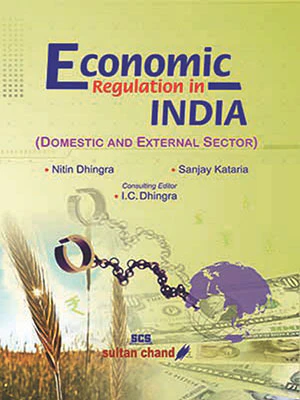
Economic Regulation in India B.Com (Prog.)
| • The worldwide acceptance of the philosophy underlying the policy of Liberalisation, Privatisation and Globalisation has unleashed the ‘animal spirits’, especially in the fastemerging economics. ‘Chains’ on entrepreneurship and 3-Is (Innovations, Initiatives and Investments) are getting removed gradually and steadily. Market forces are getting a free hand. This leaves the ground free for the operation of what Joseph Schumpeter had called the “process of creative destruction”. • The paradox of a free market system is that it requires tough regulations to ensure freedom and fairness. Independent regulation has become a part of the language of economic reforms. “Watchdogs” are being put in place; it is to ensure that free market forces do not conspire to free consumers, factor-inputs, and weaken rivals. • The book examines in a simple language and easy-to-follow style the theoretical foundations of regulation, its legislative and institutional design, and the machinery put in place to exercise effective and efficient regulation, both of the domestic and external sectors of the economy. |
| • The worldwide acceptance of the philosophy underlying the policy of Liberalisation, Privatisation and Globalisation has unleashed the ‘animal spirits’, especially in the fastemerging economics. ‘Chains’ on entrepreneurship and 3-Is (Innovations, Initiatives and Investments) are getting removed gradually and steadily. Market forces are getting a free hand. This leaves the ground free for the operation of what Joseph Schumpeter had called the “process of creative destruction”. • The paradox of a free market system is that it requires tough regulations to ensure freedom and fairness. Independent regulation has become a part of the language of economic reforms. “Watchdogs” are being put in place; it is to ensure that free market forces do not conspire to free consumers, factor-inputs, and weaken rivals. • The book examines in a simple language and easy-to-follow style the theoretical foundations of regulation, its legislative and institutional design, and the machinery put in place to exercise effective and efficient regulation, both of the domestic and external sectors of the economy. |
$92.75
Original: $265.00
-65%Economic Regulation in India B.Com (Prog.)—
$265.00
$92.75Description
| • The worldwide acceptance of the philosophy underlying the policy of Liberalisation, Privatisation and Globalisation has unleashed the ‘animal spirits’, especially in the fastemerging economics. ‘Chains’ on entrepreneurship and 3-Is (Innovations, Initiatives and Investments) are getting removed gradually and steadily. Market forces are getting a free hand. This leaves the ground free for the operation of what Joseph Schumpeter had called the “process of creative destruction”. • The paradox of a free market system is that it requires tough regulations to ensure freedom and fairness. Independent regulation has become a part of the language of economic reforms. “Watchdogs” are being put in place; it is to ensure that free market forces do not conspire to free consumers, factor-inputs, and weaken rivals. • The book examines in a simple language and easy-to-follow style the theoretical foundations of regulation, its legislative and institutional design, and the machinery put in place to exercise effective and efficient regulation, both of the domestic and external sectors of the economy. |